Kitchens, entries and hallways
These rooms take the most foot traffic, so a poured terrazzo floor makes sense there, with a hard surface that stands up to daily wear and cleans up with a sweep and a mop.
Tired of a floor that stains, chips or needs constant care? We help you pick the terrazzo system your slab can actually hold.
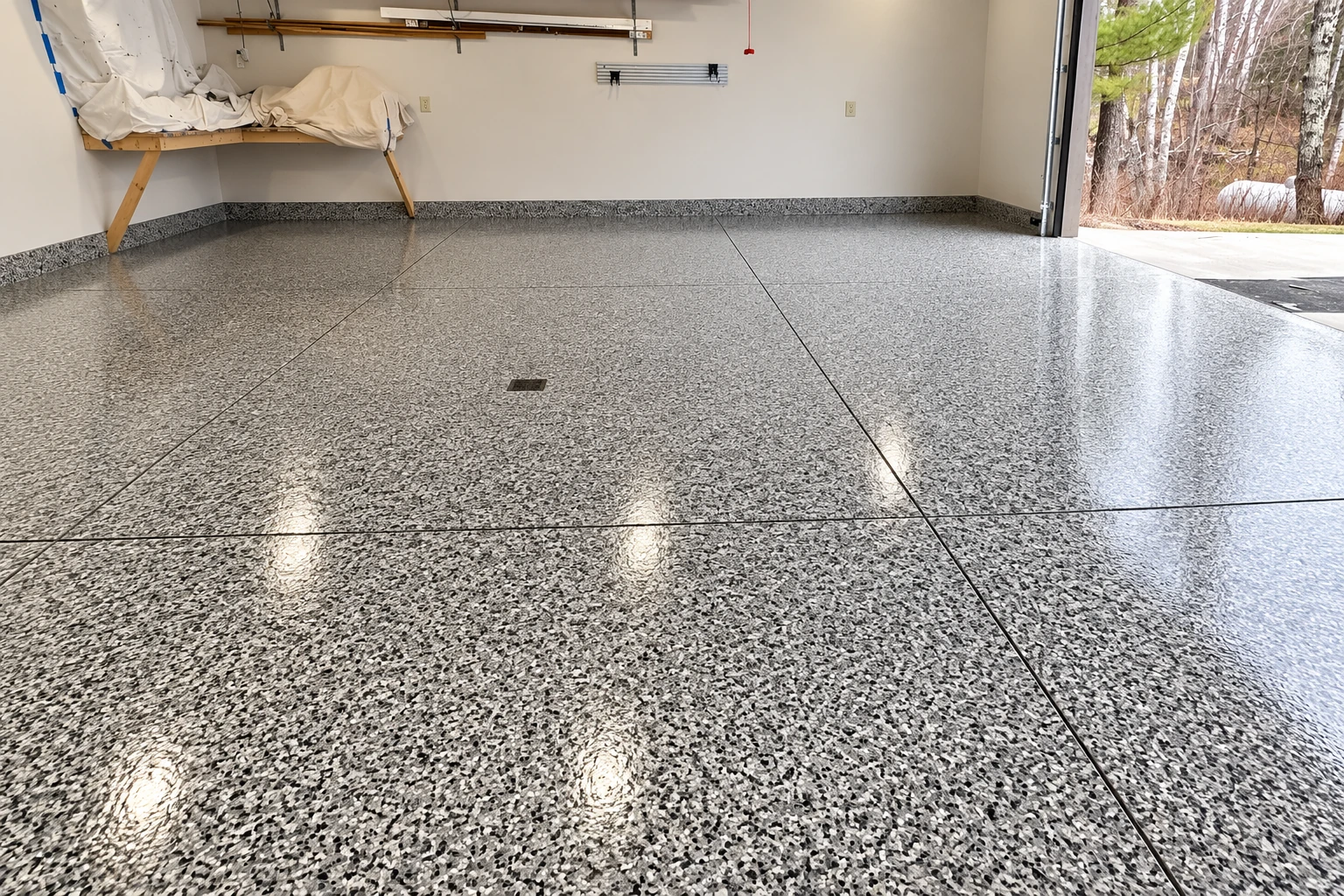
Terrazzo flooring in Spring Valley, CA is a floor of marble, glass or granite chips set in a resin or cement base, poured over your concrete, cured and often polished, and it gives you a hard, long-wearing floor that takes little upkeep.
Most people who ask me about terrazzo want to replace a worn floor or a plain slab with something that'll last. The price moves with the size of the room, which system your slab can take, how much grinding and repair the concrete needs, and whether the floor is inside or out. The schedule turns on that same prep and on whether an old floor has to come out first, and the estimate I write after seeing your slab gives you your own figure. We're fully licensed and insured, and before we start we check with the office that covers your address, since some addresses here fall under a city and others under the county, where San Diego County's Building Services Division issues building permits for homes and businesses in the unincorporated areas. If a permit is needed, we'll walk you through it and take care of our part.
I come out to every job to look at the slab and write the estimate, so the person telling you what your floor can handle is the one planning it.
We take our time on the slab first, because nobody sees the prep once the floor is done, but it decides how well your terrazzo holds up.
We clean up as we go and again when we finish, so when our crew leaves, the only thing that's changed in your house is the floor.
We start by testing your slab, then help you choose between an epoxy and a cement system based on what that concrete can handle and whether the floor is inside or out. If your slab can't take what you had in mind, I'll tell you plainly rather than sell you a floor that looks good for a season. If it's epoxy, we plan for moisture control from the start, because epoxy terrazzo doesn't breathe, and moisture coming up from the slab or the space below it will usually make it fail. Then our crew grinds the concrete, fixes cracks and low spots and gets it clean and sound, since that prep is what the whole floor rests on. We pour the terrazzo, give it the time it needs to fully cure, then grind and polish it, and we leave your house the way we found it, just with a better floor.
Most of the work happens before the pour, which is why concrete grinding and surface preparation is part of the job. If you're thinking about a floor below grade, we'll weigh terrazzo against our other basement flooring options, so you end up with something that slab can carry.
These rooms take the most foot traffic, so a poured terrazzo floor makes sense there, with a hard surface that stands up to daily wear and cleans up with a sweep and a mop.
Terrazzo tile isn't as durable as a poured floor, but it suits indoor rooms and often costs a good deal less, because it takes less labor to put down.
Epoxy terrazzo can use glass, synthetic or granite chips in place of marble, so you can go for brilliant color or pick chips that hold up better against chemicals.
Below grade, moisture under the slab is the bigger worry, so we test before we'd put epoxy terrazzo down there and talk through other options if it won't suit.
We reply within one business day to set a time, then I come out, look at your slab and write the estimate on site. It's free, and there's no obligation.
Give us the rough square footage, because the room size is a big part of what the floor costs, and it helps me plan what to look at when I come out.
Tell us the current flooring and roughly when the house was built, since an old floor may have to come out first and older flooring can call for testing.
Let us know whether the floor is indoors or out, because that steers the choice between an epoxy and a cement system before I've even seen the slab.
These photos show the kinds of chip colors, base tones and layouts we can talk through when you're picking a terrazzo or concrete finish.
Straight answers on picking a system, what terrazzo costs, going over an old floor and how long the work usually takes.
Epoxy usually suits a flat indoor slab and a thin floor, while cement is the usual advice for outside. Epoxy terrazzo is a thin layer placed on the slab, and sand-cushion terrazzo is an indoor cement system 2½ to 3 inches thick, built independent of the slab. One cost guide says epoxy can peel and fade outdoors and advises cement there, even though it costs more.
Poured terrazzo materials usually cost about $5 to $15 per square foot across the US, with labor added on top. One cost guide puts terrazzo's life at 40 to 100 years with little upkeep, which is worth weighing against that upfront price. The prep and the system your slab needs move your own number, and I'll give you yours once I've seen the room.
It can go over a concrete base, but hardwood or linoleum has to come out before the project starts. Once that's up, we treat the concrete underneath like any other slab and prep it before the pour. If your house is older, check the next answer before anyone pulls the old floor.
It may, since the San Diego County Air District lists flooring among the materials more likely to contain asbestos, most often from before 1980 but still possible after. The district strongly recommends having a trained, accredited asbestos professional take samples and test first. For a single-family home with no detached residential structure, such as a granny flat, its rule doesn't require that testing.
One cost guide says epoxy or cement terrazzo takes roughly one to two days to install, and longer when the floor needs more prep. The floor then has to fully cure before anyone uses it, and polishing often comes after that. Removing an old floor and repairing the slab are usually what stretch the schedule.
We're based in Spring Valley and take calls seven days a week, so if you're not sure we cover your address, just call (619) 648-8003.