Garage doors that face south
Epoxy tends to yellow in sunlight, especially when a south-facing garage door stays open a lot, while polyaspartic resists yellowing, so that's the garage where it earns its higher price.
Stained, dusty or peeling garage concrete? We grind it, test it for moisture and lay a fast-curing coating that sticks.
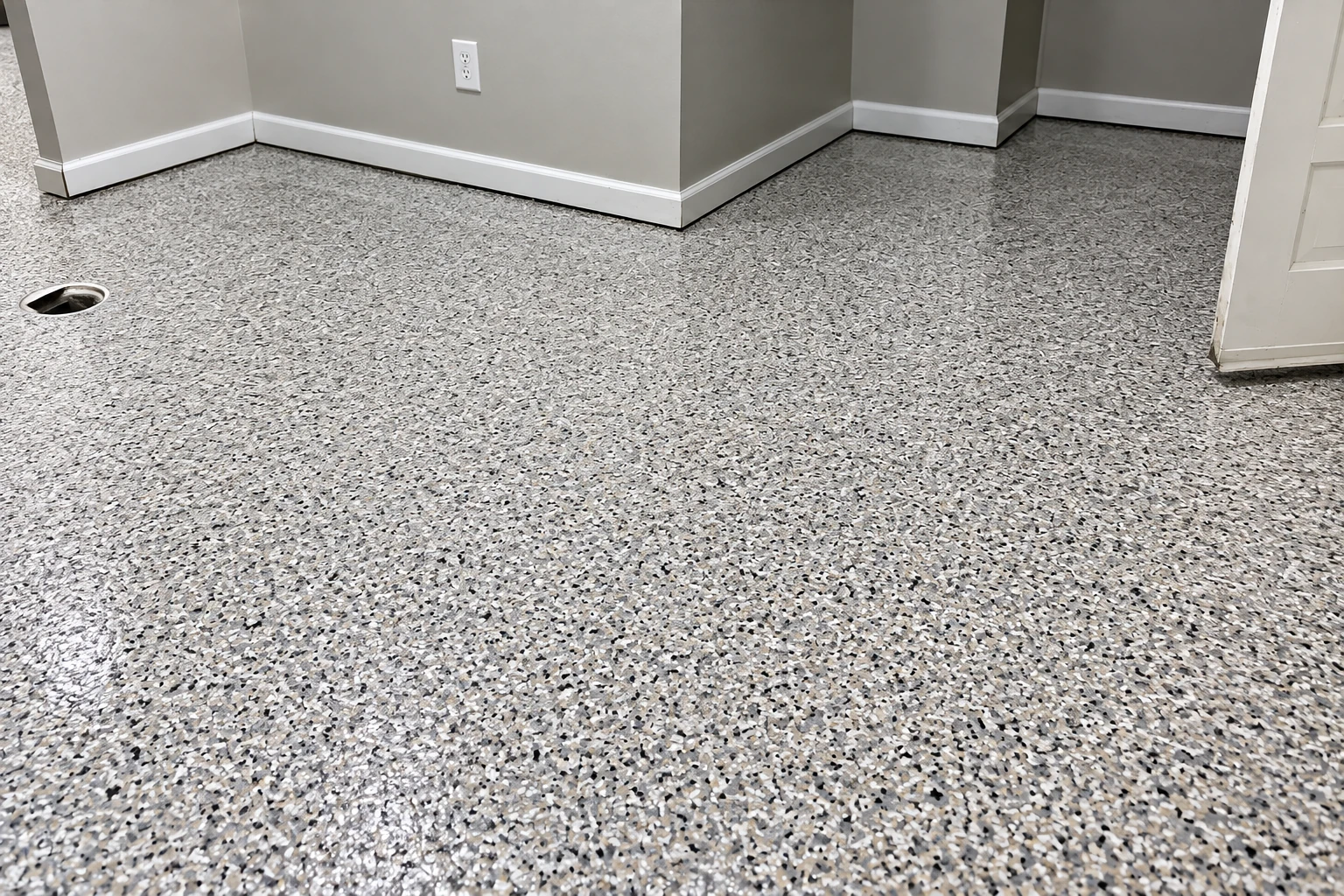
A polyaspartic floor coating is a newer cousin of polyurea that we lay over freshly ground concrete in Spring Valley, giving your garage a hard floor that wipes clean and often cures in a day.
Most people call us when the garage floor is dusting, soaking up oil or peeling from a coating that didn't hold, and they want it fixed without losing the garage for a week. The price moves with the size of the floor, how much grinding it needs, whether an old coating or sealer has to come off and how many cracks need filling first. The schedule mostly turns on the moisture test, because a damp slab has to be dealt with before anything goes down. I come out to every job, look at the slab and write the estimate myself, so the number you get is for your floor.
We're known for taking our time on the slab, because nobody sees the prep once the floor is done, but it decides how well the coating holds up.
I come out to look at every job and write the estimate, and our crew does the prep and coating, so what I see on your slab is what we plan for.
I'd rather tell you plainly what your concrete can handle than sell you a floor that looks good for one season and then starts to let go.
This coating sets fast, so there's no room for rushed prep, and that's where we spend our time. We clear the floor, grind the concrete and vacuum up the dust, then test the slab for moisture before we mix any coating. Cracks and chips get filled and ground flush so they don't show through, and then our crew lays the coating in sections, working quickly because once it starts to set there's no going back over it. When we're done, we pick up after ourselves and leave your garage the way we found it, only with a better floor.
Polyaspartic is a thin coating made for garages and floors like them, and it isn't the answer for every room. If you want a floor with depth and swirling color, metallic epoxy flooring gives that poured look. For a shop or work floor that takes heat, hot water and strong cleaners, urethane cement flooring is the tougher system, and I'll tell you which one fits when I see the space.
Epoxy tends to yellow in sunlight, especially when a south-facing garage door stays open a lot, while polyaspartic resists yellowing, so that's the garage where it earns its higher price.
If you can't leave the car on the street for a week or you work out of the garage, a fast cure means far less time with the space out of use.
Oil drips, dropped tools and rolling carts are hard on bare concrete, and a coated floor wipes clean instead of soaking up stains and shedding dust onto everything you store.
In a basement or a shaded room, sunlight isn't a factor, so I'll tell you plainly if epoxy would do the same job for less money before you pay for polyaspartic.
Send the form and we'll reply within one business day to set a time. I come out, look at the slab and write your estimate, free and with no obligation.
One car, two cars or a shop bay is enough to start, because the size of the floor is the biggest thing that moves the price of this job.
If your garage door faces south and stays open a lot, mention it, since that's when sun resistance is most worth paying for over epoxy.
Paint, sealer or a peeling coating on the floor means more grinding before we start, so knowing about it up front keeps the estimate close to the real job.
Example flake blends, solid colors and metallic finishes to look through before we talk about what suits your floor and how you use it.
Straight answers to what Spring Valley homeowners ask about polyaspartic garage floors, from price and cure time to prep and permits.
A polyaspartic coating for a typical 2-car garage in the San Diego area usually costs about $2,700 to $5,400 for the job. It runs more per square foot than epoxy around here, though it often goes on in a day instead of two or three. I'll give you the figure for your floor once I've seen the slab.
One national cost guide says a polyaspartic floor can usually take foot traffic in 4 to 6 hours and cars within 24 hours. The same guide puts epoxy at 5 to 7 days, so you lose far less use of the garage. Our crew will tell you before they leave when it's ready for your car.
Grinding roughens the concrete so the coating has something to grip, and most installers treat diamond grinding as the standard prep. Acid washing is faster and cheaper but usually leaves a weaker bond, so ask which prep each quote includes. One coating maker's prep guide also calls for grinding or shotblasting to take off old coatings and curing compounds.
Yes, a slab can feel bone dry to the touch and still hold enough moisture inside to lift a coating within months. That's why we test instead of trusting how it looks. The limit that counts comes from the coating maker, so it's fair to ask any installer which test they run and whose limit they follow.
One national cost guide lists 15 to 20 years for polyaspartic garage floor coatings. That's the guide's figure and not a promise, and how long yours lasts comes down mostly to the prep underneath it. Our work is backed by our satisfaction guarantee, and I'll tell you what your slab can handle before we start.
You'll want a licensed contractor, because California only lets someone without a license take a job under $1,000 that needs no permit and has no employees on it. We're fully licensed and insured. For permits, we check with the office that covers your address before we start, usually the county's Building Services Division, and if one is needed we'll walk you through it.
We work in Spring Valley and many cities around it, so call (619) 648-8003 or use the form if you're unsure we cover you.