Garages with the door mostly shut
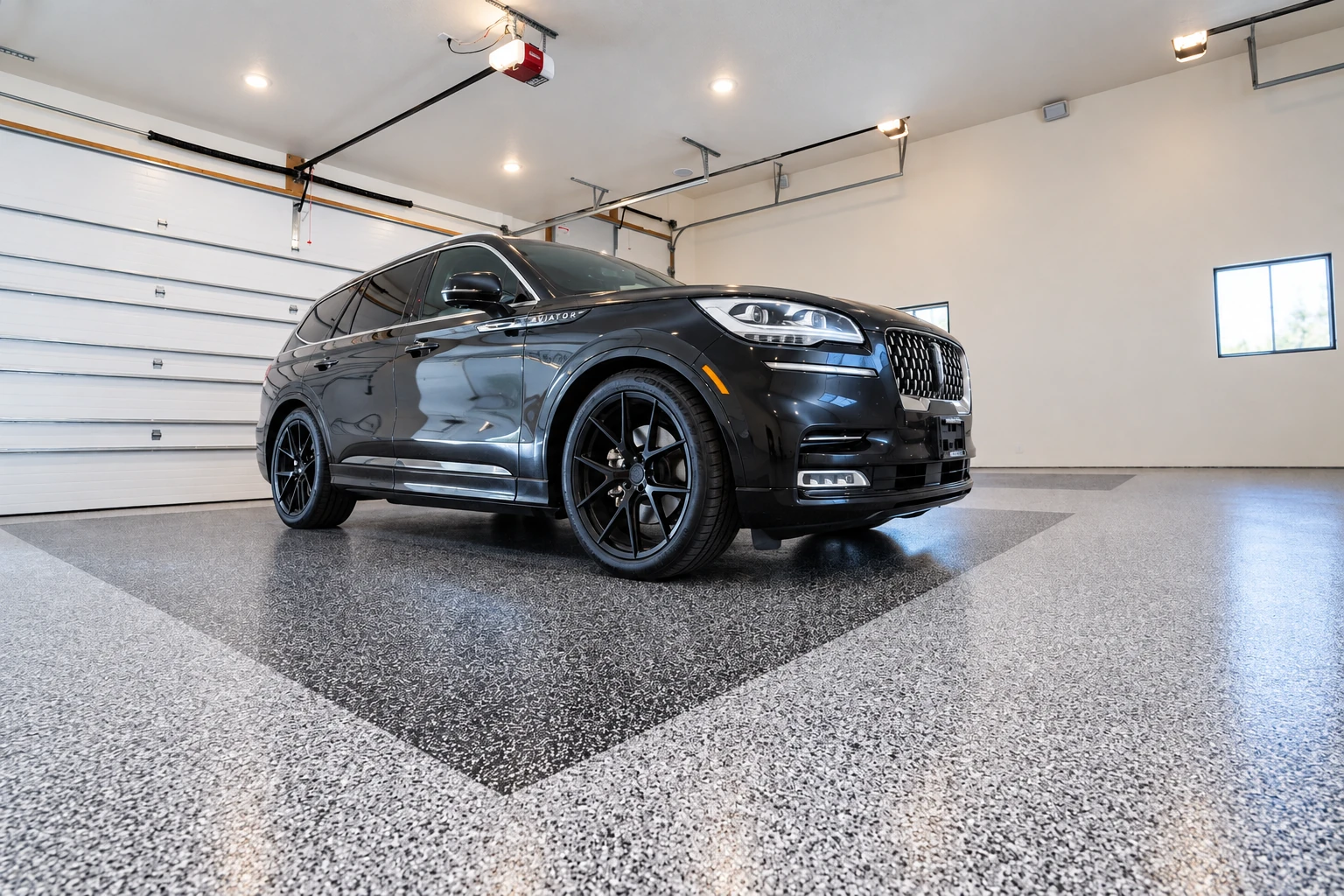
A garage that stays out of direct sun is a good fit for plain epoxy, and a coated floor is much easier to sweep and wipe after oil drips.
Dusty, stained or tired concrete in your garage or basement? We prep the slab properly so the epoxy goes down smooth and stays put.
Epoxy floor coatings in Spring Valley, CA give an indoor concrete floor a hard, smooth surface that's easy to sweep and mop, and the work we do on the slab first is what decides how well it holds.
Most people call when a garage floor is stained and dusting, or a basement or workshop floor won't stay clean. What moves the price is the size of the floor and the shape the slab is in, since old sealer, cracks and holes all add grinding and patching before any coating goes down. The schedule turns on the slab too, because a damp floor has to dry and new concrete has to finish curing before we can coat it, and then the coating needs its own time before you use the floor again. You'll get your own figure in a free estimate done on site.
I come out to look at every job and write the estimate myself, so the person pricing your floor is the one who's actually stood on your slab and seen what it needs.
We're known for taking our time on the slab, because the prep is what nobody sees later and it's what decides whether the coating holds or starts lifting.
Our crew cleans up the dust, tape and leftover material before we leave, so the only thing that's changed when we pack up is the floor itself.
First I look at where the floor is, because we keep plain epoxy to indoor floors that stay out of the sun. Then we check that the slab is dry, since a coating won't hold on concrete that stays damp underneath. Our crew grinds the surface so the epoxy has clean, open concrete to grip, then patches cracks and holes, because any flaw left in the concrete shows right through the finished coat. We vacuum up the grinding dust before we mix a thing, since dust left on the slab keeps the coating from bonding, and once the epoxy is rolled out we clean up and leave the floor to cure.
A lot of our epoxy work is in garages, and our garage floor coatings page covers what a parked car and daily coming and going ask of a floor. For shops and warehouses, where carts, equipment and more floor come into it, see commercial and industrial epoxy floor coatings.
A garage that stays out of direct sun is a good fit for plain epoxy, and a coated floor is much easier to sweep and wipe after oil drips.
A dry basement slab can take epoxy well. We check for damp first, because moisture working up from below is the thing this coating handles worst.
These rooms get a floor that doesn't dust up and cleans with a mop, which matters when you're dropping tools or wiping up spills every week.
Some shop and warehouse owners call us too, and an indoor work floor out of the sun is the same kind of job, just with more floor and harder use to plan for.
Send the form and we'll reply within one business day to set a time. I'll come out, look at your slab and write up a free estimate, with no obligation to go ahead.
A rough size helps, like a one- or two-car garage or a room's length and width, so I can plan the visit and know what we're looking at.
If you've seen darker patches or water showing up near the walls, say so, because a damp slab changes what the floor needs before any coating goes down.
Let us know how old the concrete is and how much sun reaches the floor, since new concrete has to cure first and a sunny floor needs a different coating.
Example photos of solid colors, flake blends and metallic finishes on garage, basement and shop floors to help you pick what to ask about.
Straight answers on cost, permits, licensing, sun, damp slabs and how soon you can use the floor again after it's coated.
Across the US, epoxy coating for a 2-car garage floor usually runs about $1,100 to $4,300 for the whole project. That's the market's range, not our price. Yours depends on the floor's size and how much grinding and patching the slab needs, and I'll give you your own figure in a free on-site estimate. The work is backed by our satisfaction guarantee.
You ask the office that covers your address, and for unincorporated parts of the county that's the County of San Diego's Planning and Development Services. Some addresses here fall under a city instead, so we check with the right office before we start. If they say a permit's needed, we'll walk you through it and take care of our part.
Yes, unless the job is small, because California only lets unlicensed workers take jobs up to $1,000, and only when the work needs no permit and they have no one working for them on it. We're fully licensed and insured, and we work in Spring Valley and many of the cities around it, so ask if you're not sure we cover your address.
Plain epoxy isn't the right coating outside or on a floor that gets steady sun. One maker says its epoxy is for interior floors only and will yellow and turn powdery in UV light, and another says its epoxy isn't made for exterior use. One maker recommends a polyaspartic topcoat over cured epoxy for better UV protection and wear.
One maker's test leaves a weighted rubber mat or plastic sheet on the concrete for 24 hours, and if it looks darker underneath, it's damp. If it stays damp after more drying time, that maker says it can't be coated, so a wet slab can stop the job. New concrete waits too, since one maker says it needs at least 30 days to cure first.
With one maker's epoxy, foot traffic can start after 24 hours, heavy traffic after 72 hours, and full cure takes 7 days at 70°F. Owners usually keep heavy use off the floor until it's fully cured, so plan where the car and the heavy stuff will go that week. We'll go over the timing for your floor before we start.
We're open seven days a week until 9 PM, so call (619) 648-8003 or send the form whenever it suits you.